Home
Advertisers

Home > Properties

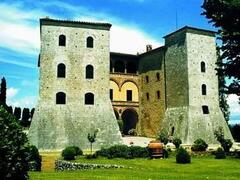
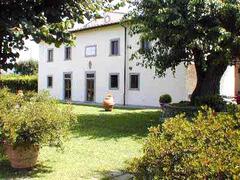
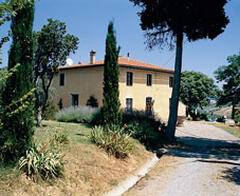
SANTA MARIA - 300m Farmhouse in Tuscany Italy


Villa in Tuscany, Italy


Property Details

This area is one of the most sort after by the Italians as it has remained "unspoilt". Made famous by the photographers who photographed the area for postcards,books and calenders. The area offers so much due to it's closeness to Siena, Pienza, Montalcino,San Quirico; the antique thermal baths of Bagni Vignoni and San Fillipo. Florence is an easy day trip. Numerous beautiful medieval villages that have been restored to perfection, yet still maintain their original beauty and lifestyle of theTuscany of years gone by.
The property is located between Pienza and San Quirico (5kms from each town). There is also a small village at 1.5 kms with a bar, Pizzeria and small goods. There are many superb restaurants in all these towns and also at 3 kms the antique thermal baths of Bagni Vignoni and the village boasting the Roman remains, enoteca's, restaurants, pizzerias, breathtaking views and quaint shops.

Villa Santa Maria is located in the middle of a nature reserve full of pheasant, deer, hares, owls and other wildlife. At 20kms there are the towns of the Mount Amiata. The area is also a gastronomic heaven producing cheeses (famous pecorino cheeses of Pienza), fresh handmade pasta, some of the best and most noted wines of Italy, truffles, the famous Porcini mushrooms, wild boar and the Chianina meat.

The locals boast a love of their land, they are very hospitable, friendly and relaxed. The villages are charming, characteristic and full of history and culture. Small shops with local produce and artifacts line the shaded stone lined streets. For the wine lovers one can sit outside and taste the famous wines of the region at many of the enoteca ‘s and bars. The enoteca also serves meals, platters of cheeses and coldcuts (prosciutto, salame etc.).

The villages grasp onto the history of the region with honor, celebrating all the medieval and local festivals as they have done for centuries.

Driving through this area is a treat in itself, cyprus lined rolling hills spotted with medieval villages and towers. Large country homes and a constant changing landscape depending on the crops of the season. From this location one can easily embark on day trips to Florence, Siena, Cortona, Montepulciano, Montalcino and venture over the hill to discover the magnificent coast line of Marremma only 40mins drive.
Perugia, Cortona and Arezzo are all within easy reach.

Rome is 1.5hrs away.

Beautifully restored 300m2 on 2 levels, the house has a huge open living room that accesses the terrace with outdoor furnishings for dining and relaxing.

1 double bedroom and a full bathroom accessible from both the bedroom and living room.

Stairs lead to the first floor with an open dining/ kitchen with high ceilings, wooden beams, original terracotta floors and open fireplace.

To the RT there is a door seperating the sleeping area:2 bedrooms and 1 bathroom between them with tub/shower.

To the LT another door with a further 2 bedrooms and bathroom with shower.

There is a door from the dining room leading to the exterior staircase.

The 3 bathrooms accessible from all rooms. (2 with bathtub/shower/bidet and handbasin;1 with shower, wc, bidet and handbasin)

Tuscan country furnishings.

All bedrooms have screens on the windows.

Beautiful views of the medieval towns surrounding the property, the valley and fields. Mount Amiata is the backdrop.Pool with lounges.

Garden: Typical of the area with cyprus trees, roses, lavender, ginestra and a large pine.

This villa can be rented also on a non sat-sat basis.
Min 1 week in high season.

Local Area Details

Pienza

Pienza from UNESCO site "The Committee decided to inscribe the nominated property on the basis of cultural criteria considering that the site is of outstanding universal value as it represents the first application of the Renaissance Humanist concept of urban design, and as such occupies a seminal position in the development of the concept of the planned "ideal town" which was to play a significant role in subsequent urban development in Italy and beyond. The application of this principle in Pienza, and in particular in the group of buildings around the central square, resulted in a masterpiece of human creative genius." more infos from "


San Galgano

The original nucleus of the monastic complex Cistercian of Saint Galgano (Galgano Guidotti 1148-1181) is constituted by the hermitage of Montesiepi, built in Roman style as mausoleum of the Saint between the 1182 and the 1185. Its greater particularity is the so-called 'the Rotunda of Saint Galgano' with a unique, for the constructions of that time, plan. It encloses, beyond to the tomb of the saint, the famous rock with the sword. Although at a first look it can seem an emulation of ancient Etruscan tombs of Populonia, Vetulonia and Volterra, the architect responsible of its construction inspired itself to Castel S.Angelo and the Pantheon of Rome.

Bagni Vignoni

The name of this ancient village derives from Vignoni, already famous castle in XI century, whose traces dominate the hill over the village.The thermal water where used by the Romans ,archaeological artfacts are found in the Chigi collection of Siena, National Archaeological Museum. A porch-type bridge passes over the waters flowing from the bath towards the termal establishments and subsequently going on to feed a series of mils situated along the steep edge sloping down towards the river an area that may now be visited thanks. Lo extensive resounding carried out by the St. Quirico Council (Watermill Park).


San Quirico D'Orcia

It is an historical village, probably of etruscan origins, situated at about 40 km south from Siena, on the hills that divide the two river valleys of Asso and Orcia.

Becouse of its position, in the middle of the main Francigen Route, it has been for long time a point of passage for wayfarers, pilgrims and merchants on the way to Rome. One of them was Frederick II of Swabia who met here the Pope Adrian IV ambassadors. This historical moment is celebrated every year the third Sunday of June with "Il Barbarossa" day. People wearing historical costumes show in a flag-waving and bow-shooting race.

The Orcia's Valley

The Orcia River courses through the Val D' Orcia valley from west to east . The landscape of the Val d' Orcia is of a charming nature, characterized by small hills with biancane and calanchi to the flanks and wide agricultural lands and zones of pasture to the center offering a fabulous contrast between the hard landscape of the crete generate and that of the more harmonious cultivates and of the filari of cypresses on the gentile rolling hills. The lunar aspect that inspired and amazed famous writers, mystics and poets of the past, that happen to travel through this valley on their journeys from Siena to Rome, like Dickens or Howtorne or De Sade.

Montepulciano

Montepulciano, is built along a narrow limestone ridge and, at 605 m (1,950 ft) above sea level. The town is encircled by walls and fortifications designed by Antonio da Sangallo the Elder in 1511 for Cosimo I. Inside the walls the streets are crammed with Renaissance-style palazzi and churches, but the town is chiefly known for its good local Vino Nobile wines. a long, winding street called the Corso climbs up into the main square, which crowns the summit of the hill.

In July-August there is Cantiere Internazionale d'Arte, an arts festival created by the German composer Hans Werner Henze. In August there are two festivals: the Bruscello takes place on the 14th, 15th and 16th, when hordes of actors reenact scenes from the town's turbulent history. For the Bravio delle Botti, on the last Sunday in August, there is a parade through the streets followed by a barrel race and a banquet to end the day.

Madonna di San Biagio
Via di San Biagio, 14 - Open daily

This beautiful church is on the outskirts of Montepulciano. Built of honey - and cream - colored travertine, it is Sangallo's masterpiece, a Renaissance gem begun in 1518. The project occupied him until his daeth in 1534.

Palazzo Bucelli
Corso, 73 - Closed

The lower façade of the palazzo (1648) is studded with ancient Etruscan reliefs and funerary urns collected by its 18th-century antiquarian owner, Pietro Bucelli.

Sant'Agostino
Piazza Michelozzo - Open daily

Michelozzo built the church in 1427, with an elaborate carved portal featuring the Virgin and child flanked by St. John and St. Augustine.

Palazzo Comunale
Piazza Grande, 1 - Open Monday - Saturday

In the 15th century, Michelozzo added a tower and façade to the original Gothic town hall. The building is now a smaller version of the Palazzo Vecchio. On a clean day, the views that can be seen from the tower are superb.

Palazzo Tarugi
Piazza Grande - Closed.

The imposing 16th-century palazzo is next to the town hall and is currently undergoing restoration to the façade.

Duomo
Piazza Grande - Open daily

The Duomo was designed between 1592 and 1630 by Ippolito Scalza. The façade is unfinished and plain, but the interior is Classical in proportions. It is the setting for an earlier masterpiece from the Siena School, the "Assumption of the Virgin" triptych painted by Taddeo di Bartolo in 1401.

Castelmuzio

Castelmuzio is situated 443 metres above the sea level and it is a typical medieval village documented since 1213: this is testified by the reminds of fortifications and especially the architectonical structure with the church and the square placed on the top of the hill. San Bernardino stopped here many times to preach.

Castiglione d'Orcia

Cited as far back as the year 714, it belonged to both the Aldobrandeschi family and the Abbey of the SS. Salvatore; it subsequently passed into the hands of the Republic of Siena. The town is a picturesque one, evocative with little paved streets which converge upon the Piazza del Vecchietta, (dedicated to Lorenzo Di Pietro, known, in fact, as "il Vecchietta"). The paving of this town square was realised with river pebbles enclosed by lines of bricks forming a sunburst pattern, its spokes leading towards a well made from travertine stone dating back to 1618. The most important religious building of Castiglione d' Orcia is the church la Chiesa dei Santi Stefano e Degna with its façade from the 1500's. At the highest point in town, one can still see remains of the original city wall which opens upon a view of the mountain Monte Amiata and upon the fortress Rocca a Tentennano. The fortresses' imposing tower, recently restored, may also be visited when the fortress is open to the public. While there on its summit, enjoy the breathtaking 360 degree panorama from Siena to Radicofani, from Montalcino to Pienza and Montepulciano, and from Monte Amiata to Monte Cetona. Moving along past the Rocca a Tentennano, one enters into the village below called Rocca d' Orcia. Here worth a visit are the churches, the Pieve di San Simone, the Chiesa della Madonna delle Grazie di Manno, and the little main town square holding a cistern said to date back to 1262. In the large area covered by the municipality, many other towns also deserve a mention: first there is Bagni San Filippo, a place known for its spa waters which gush out water at a temperature of 52 degrees centigrade (125° Fahrenheit) and which have deposited immense calcium deposits in the nearby Fosso Bianco ('White Ditch'). Then there is Campiglia d'Orcia, featuring an unusual historical centre spreading out like a fan beneath a rocky ridge and from which rises a fortress built in the year 973. Ripa d' Orcia, on the right side of the river, has one of the most evocative castles in the valley. At Vivo d' Orcia there is the Hermitage (l'Eremo, also called Contea), a palace built in the late Renaissance Age by the Camaldolensians and, upriver from town, hidden among chestnut trees, an attractive little Romanesque church (dell'Ermicciolo) with both the façade and the apse decorated with small columns.

Montefollonico

Montefollonico, situated 462 metres above the sea level, in a dominant position of Valdichiana, was a strategic point for the Republic of Siena. It has Etruscan origins. The Romans called the people who worked the cloths "fullones", and for this reason the name of the village seems to mean place where the cloths are worked. The effiged squared in the village coat-of-arm indicate the worked and ironed cloths. It keeps the ancient walls, the Palazzo Pretorio and the Pieve of San Leonardo from the medieval structure. The town walls, along which there are seven cylindric towers, is opened by three doors: the Porta a Foolonica, the Porta del Triano and the Porta del Pianello (also called Porta Nova), the latter represents a typical example of military architecture.

Monticchiello

Monticchiello rises in the council of Pienza, at the border with that of Montepulciano, in province of Siena. It can be reached following the motorway A1 up to the exit of Valdichiana and following the indications for Pienza or in alternative from the Orcia valley, first following the road SS2 Cassia 'til the cross with the SS146 for S.Quirico D'Orcia.

The castle, or better walled town, of Monticchiello, fief of the local family of the Lambardi, was thickly strengthened from the Senesis at the to end of the 12th century, when it became an important frontier fortress. Monticchiello was the center of the defensive organization of the oriental Senese border and for this motive during its history was often object of wars and assaults, destruction and occupations. In 1229-35 it was destroyed by the Orvietani, was twice occupied on the to end of the 1300 first by the Florentine and then by the Montepulcianesi and suffered others serious devastation in 1553, found itself on the road of the march of the imperial army during the 'War of Siena'.

The whole system of the fortifications is chained to the Rocca, set in the highest point of the hill where the suburb rises, of which only the mighty keep with its bastioned walls endowed with machicoulis in stone (opening between corbels of the parapet through which the defenders can drop rocks or fire projectiles against an enemy directly below them) strongly remains. The town walls, only partially preserved, were alternated from square towers of various dimensions, two of which still flank the only survived gate. The suburb inside the fortifications has maintained intact its medieval characteristics and walking for its lanes is as breathing the history.

Radicofani

The mighty Rocca of Radicofani rises from the dark ages before the year 1000, it was named for the first time in 973, on the top of an imposing basaltic cliff of 896 meters high, from which dominates the whole territory set between the Mount Cetona, the Orcia Valley and the Mount Amiata. To its feet passed an ancient footstep of the Roman Cassia road, then named Francigena or Romea, and it was without doubt this fact that caused its birth and its big role in history, for a long time strongly tied up to this road. The pass of Radicofani was at center of an unique historical episode: toward the second half the 15th century the Senesi, worried by the fact that a part of the road resulted hardly controllable from the Fortress, replaced this, after having made it inagible, with a new layout that passed under the fortifications.

The main gate of the Medieval Castle, core of the fortification.

For its strategic importance the Fortress was contended for long time and it is almost impossible to trace the whole eventful history. Initially Radicofani was under the control of the Benedictine Abbey of the Mount Amiata but soon first the counts of the Aldobrandeschi family, in the year 1081, then the counts of Chiusi, the Manenti of Sarteano, tried to replace the monks. The Senese control began in 1139, when the count Manente da Pepone gave a sixth part of the castle to the Bishop of Siena. But the monks didn't surrendered and with the help of the Roman Church, in the figures of Pope Eugene III, was granted to them the perpetual location of half of the fortress. Pope Adriano IV, successor of Eugene, reinforced the castle and in 1198 Innocenzo III started great new works on the fortification. From this period Radicofani was often at the center of the continue struggles between Siena and Orvieto, city allied with Florence, with the constant intervention of the Roman Papacy. Here I remember only the principal historical facts: in 1262 the fortress became seat of the family Salimbeni, Guelphs escaped from Siena; in the following years the Senesi regained and destroyed the walls of Radicofani. The situation repeated itself in the years 1264-65, then there was a revolt against the power of the Church (1284) and in 1295 the castle became the eagle nest of the famous captain of venture Ghino di Tacco, that from here launched numerous attacks to the Senesi. In the 1301-1302 Radicofani was again at the center of the war conducted by Guido of Montfort and Margherita Aldobrandeschi, Ghibelline, against the Guelphs Commons allied with the Pope. The Guelphs won the war and the fortress remained in peace for a long time under the control of the papacy.

The main front of the second walled enclosure.

Siena began to move with decision in 1352 to take again possession of Radicofani but the strong controversy born between the two adversary ended with the papal concession of the castle dominion at the Salimbeni family. Finally, in 1405, the Senese Republic and the Salimbeni signed the peace and the castle passed to Siena. In 1417 began the construction of the new bastionated fortress around the original medieval nucleus. After years of skirmishes and secondary passages of ownership, always ended with the return of Radicofani to Siena, we arrive to the last remarkable historical fact that interested the fortress: in 1555 it was besieged, bombed and invaded by the Imperial army.

The remnants of the third bastionated enclosure with the gate.

The primitive fortresses has an almost triangular plan and is gifted of a mighty keep and is today still in good condition, thanks to the works of restoration effected in 1929. Very interesting are also the rests of the other sides of the most ancient core, with rests of machicoulis for the outside defense and of two other angle towers. Around this is developed the first bastionated fortress enclosure built in beautiful worked stones, with four irregular sides. This fortress was subsequently widened toward north, being the south side already naturally protected from to strong gorge, with another walled enclosure, but of these boundaries don't remain great traces, with the exception of an angle bastion where the ancient gate of access is opened. The two bastionated walls line enclose in practice the whole basaltic cliff on two different levels, making almost impossible to reach the heart of the fortification from any side. The castle is, from the Juanary 1999 after a great work of restoration, reopened to the public. For information you can contact the Fortecoop, phone number +39578-55867.

Montalcino

At a distance of just over forty kilometres from Siena, Montalcino is named after the holm oaks that used to cover the hill it stands on.

The town, founded it would seem, in the first decades of the 10th century by refugees from the town of Roselle has kept its urban structure almost since the time of its greatest expansion and brilliance, in the Middle Ages. Its stormy history together with defensive requirements have combined to give Montalcino its picturesque setting. From the avenues that skirt the walls, we look out on to views that could be paintings by the masters of the Sienese Trecento. Empty spaces, squares, gardens and rows of olive-trees and vines relate in a kind of counterpoint with tightly-knit streets and major buildings.

The fortress, the churches, the steep lanes and stairways and alleys and the municipal palace, with its slender tower, take us back in time to distant fascinating periods.

The discovery of neolithic artefacts near the bed of the Ombrone river, in the vicinity of Badia Ardenga and of Etruscan and Roman tombs in various places around the town, prove the existence far back in history of a dense network of rural settlements. The foundations of some of the old churches which still exist to-day, such as Santa Restituta and Sesta, date back to the barbarian invasions. Towards the end of the 8th century the Abbey of Sant Antimo was founded, some say by Charlemagne.

The earliest settlements of Montalcino - the name first appears in a document of 814 A.D. - grew up under the feudal tutelage of the monks. They spread in the communal period, into a municipality, acquiring considerable importance, both political and military, owing to their strategic position on the old Francigena Way. As a result they were in conflict with Siena from the end of the 12th century for over seventy years. During this period, sieges and wars alternated with moments of fragile peace and pacts were broken at the slightest provocation.

The battle of Montaperti (1260) gave the final victory to the Sienese, who planned to destroy Montalcino, but a few years later the situation changed once again; the Ghibellines were thrown out of Siena and the people of Montalcino signed a treaty of alliance with the Guelfs which guaranteed them substantial autonomy. In 1361, after an attempted rebellion the people of Montalcino were accorded Sienese citizenship. This was followed by a period of relative peace, during which their activities - pottery, tannery and leatherwork as well as the working of wool, wood and iron, flourished. The economic ties with Siena strengthened and, in 1404 they acquired from Siena the right to levy taxes and in the following years, a whole series of fiscal exemptions which favoured economic development. In 1462 Pius II granted Montalcino the state of city and a bishop's seat. Then once again: war. In 1526 and in 1553 the town was besieged, but was able to resist thanks to the efforts of the population.

From 1555 to the 31st July 1559 the last free Italian state, the Republic of Siena, retired to Montalcino. The annexation to the medici state did not provoke any great upheaval for Montalcino which maintained its importance as a productive and commercial centre. During the second half of the 17th century there were some 140 shop-owners and artisans, the city's main activities were tannery and shoe-making.

By the end of the following century the reforms of Leopold and Napoleon eliminated a good number of mediaeval institutions. Economic conditions changed during the 19th century; agriculture with a share-cropper system prevailed over other activities. At that time several of Montalcino's inhabitants took part in the events of the Risorgimento; at the end of the century the first mutual aid societies for workers were set up. The world war took a toll of 144 inhabitants; in 1920 the elections were won by the left. The following two decades were dominated by the fascist presence and by the war, which once more descended among our 'contrade'. The fifties were marked by an agricultural crisis which caused heavy emigration. Halfway through the sixties came the first signs of recovery with a few experiments in industrialization. But it was with specialized agriculture -and Brunello as the main product that Montalcino found its true vocation. This however belongs to the chronicles of to-day.

Castle of Spedaletto
Remembered in the memories of travel of the king of France, Filippo II Augusto, of return from third Crusade(1191) articulated a complex castellano, turrito and merlato, realizing in the ' 300 and widening in the course of the successive century modifying of probably the destination from fortilizio to grancia Biocenosis


S. Anna in Camprena
The Monastery of S.Anna in Camprena was founded in the 1324 from Bernardo Tolomei. It is very famous for its REFECTORY, for the important frescoes of Antonio known as Bazzi "Sodoma" (1502-1503) that they decorate it.The Monastery will remain in the history of cinema ,many scenes of the English Patient whre taken there


Abbazia di Monte Oliveto

MONTE OLIVETO MAGGIORE is an early foundation of the Olivetan Order and the Abbey itself is one of the most interesting in Italy. lt stands in the very heart of Tuscany in a beautiful position 33 Km. from Siena among lofty cypresses facing a very suggestive view of the Sienese 'crete' (moors).

It was begun in 1313 by Giovanni Tolomei, later on called Bernardo, with the help of the Sienese nobles Patrizio Patrizi and Ambrogio Piccolomini who lived as hermits with Bernardo; the place at that time was know as the "deserto di Accòna" (the desert of Accona). Other hermits joined them in the process of time. The new foundation followed the Benedictine Rule and, having been approved by Guido Tarlati, the Archbishop of Arezzo in 1319, was sanctioned by Pope Clement VI in 1344.

Around the Abbey are grouped smaller churches, chapels, churches and later additions adorned with graceful loggias. The main gateway is surmounted by a square watch tower decorated with an early 16th century terracotta of Virgin Mary and the Holy Babe with two Angels. Along the shady paths are several Chapels built in the memory of the Saints: Blessed Bernardo's Chapel near the cave where he dwelt (rebuilt in 1760), Santa Scolastica's Chapel built by Bernardo Tolomei and the Chapel of Santa Francesca Romana, dated 1644.

The grand Gothic Abbey built in the shape of a Latin cross was rebuilt inside in the late years of the 18th century.

The beautiful choir stalls were carved and inlaid by Fra Giovanni da Verona from 1503 to 1505, the lectern was made by Raffaello da Brescia in 1518 and the delightful wooden Crucifix is a work of art of the 13th century.

Works of art are to be seen everywhere in this Monastery but particulary in the loggia running around the "Chiostro Grande" (larger cloister) where the walls are frescoed with 36 scenes from the Stories of San Benedetto da Norcia as they were told by St. Gregory. Nine of these frescoes were painted by Luca Signorelli from 1497 to 1498, the rest by Giovanni Antonio Bazzi nicknamed Sodoma from 1505 to 1508.

The well is dated 1439. This Loggia is surmounted by another one resting on graceful pillars. The refectory was frescoed in the 17th century and the Library was planned by Fra Giovanni da Verona in 1518 to house a set of 15th century miniated chorals and some precious pottery. The same artist carved the door, one of the candelabra and a cupboard.

The actual monastery was started a year after the signing of the "Charta fundationis" dated March 26th., 1319 where by it was prescribed that the church should be surrounded with minor buildings.

Monte Oliveto Maggiore is the cradle of the Olivetan Order.

From the earliest times down to the present day it has always held a foremost position in the fields of science, art and of studies in general. A school for the recovery of old books (Istituto di patologia dei libro) has now been founded where qualified monks carry out the most skilful and amazing work.

Sant'Antimo

The Abbey of St.Antimo,near Castelnuovo dell'Abate,is an important example of the thirteenth-century monastic architecture.The present church,dating back to the 12th century,has a simple façade crowned with small arches, a massive square bell tower in the Lombard style with a 12th century bell, and a semicircular apse.The interior -a Romanesque basilican structure - has a nave and two aisles separated by high columns and spaced out by cruciform pillars.The abbey,restored at the beginning of the 20th century,is the seat of a comunnity of canons who officiate with Gregorian chants.

The Via Francigena

The Via Francigena is a historical itinerary leading to Rome from Canterbury, a major route which in the past was used by thousands of pilgrims on their way to Rome. At the beginning of the 11th century mainly, a multitude of souls "looking for their Lost Heavenly Home" took the habit of travelling across Europe. This route bears witness to the importance of the practice of pilgrimage in medieval times; the pilgrim was to travel mostly on foot (for penitential reasons), covering about 20-25 Km a day,and was driven by a fundamentally devotional reason: the pilgrimage to the Holy Sites of Christianity.There were at the time three main centers of attraction for that journeying humanity:Rome, first of all, the site of the martyrdom of Saint Peter and Saint Paul; Santiago de Compostela, the place chosen by the apostle Saint James to rest in peace and obviously Jerusalem in the Holy Land. The pilgrim did not travel alone but in a group and he used to carry the pilgrimage emblems (the shell for Santiago de Compostela, the cross for Jerusalem and the key for Saint Peter in Rome). Along these very same pilgrim routes, an intense trading activity was carried out and armies followed the same itineraries in the course of their movements.

http://www.francigena.ch/eng/via.shtml

Bagni san filippo

Baths Saint Filippo owes its origin to the presence of her thermal waters with therapeutic property known from antiquity. One thinks, in fact, that the origin of the thermal center is Etruscan, while the very existence of a roman takeover inthe imperial age is documented. After alternate vicissitudes, an important impulse of the thermal activity was had to the end of theXVIII century, thanks to the scientific analysis of the waters that confirm the property and extend the use of application for the cutaneous, reumatiche and arthritic diseases, to the cure of the respiratory diseases. In the beginning of century XIX the construction of a new thermal system and widening of the receptive potentiality of the country transforming some buildings into lodges still existing. The cave of Saint Filippo is to visit, dug in a single great block of travertino; here according to legend Saint Filippo Benizi in 1267 sheltered here in order to escape being elected to Pope and to live in hermitage. In the area near the town one can find the White cave where the thermal waters slide and create waterfalls and leave in their passage, thanks to their limestone, a unique landscape of characteristic candid cliffs, carved in the most various shapes.

San Casciano Bagni

The thermal waters at San Casciano gush out from a multitude of springs constituting a basin of noteworthy capacity. The chemical - physical characteristics classify it as hyper-thermal, sulfuric, calcic and magnesic water: at some of these springs natural, thermal mud is formed that has extraordinary therapeutic properties. The muds are obtained through a natural mixture of mineral water and clay that is steeped and enriched with mineral components in underground cavities that surround San Casciano dei Bagni.

Treatments

The present owners of the thermal complex have an innovative program for improving the thermal treatments, which will take maximum advantage of the thermal water in a natural and climatic environment.

Pelobalneotherapy

The role of baths in the treatment of rheumatic illness is to supply assistance in the prevention and/or cure of some articular affections, to reduce recurrence of symptoms or complications and to rehabilitate the patient. San Casciano dei Bagni will be part of this new approach in health spas, with the continuous presence of specialists in various disciplines and with its new facilities for the treatment and rehabilitation of the pathologies that will most benefit from thermal treatments.

Mineral Water Cures

Mineral water treatments have always been carried out in the principal health spas and have traditionally constituted the most immediate and pleasant aspect of spa treatment for the patient. Usually the illnesses treated by drinking water are those regarding the stomach, the intestine, the urinary tract, and diseases such as gout, obesity and diabetes as well as some pediatric ailments.

Treatment of ear, nose and throat diseases (aerosol, inhalations and nebulization)

Inhalatory thermal treatments through various techniques allow for the treatment of various upper respiratory pathologies such as rhinitis, sinusitis, pharyngitis, adenoids, tonsillitis, laryngitis as well as pulmonary problems such as chronic bronchitis, tracheo-bronchitis and forms of asthma with mucous build up. In the near future the Spas at San Casciano dei Bagni will also have pertubarich inhalations to face the problem of rhinologic deafness.

Dermatology, esthetic and gynecological treatments

Certain gynecological problems benefit greatly from thermal therapy. Even some infertility problems are alleviated by resolving chronic inflammation and aiding the endocrinological system. The vegetable mineral muds mixed with the thermal waters from the spring named "Il Portico" in San Casciano dei Bagni are used in facial masks in specific therapeutic treatments in cases of seborrhea, acne and beginning phases of cutaneous senescence


Compare Holiday Rental Properties in Tuscany

Holiday Rental Apartments in Tuscany Self Catering Villas in Tuscany
Rental Apartments in Italy Self Catering Villas in Italy


Property Information

Type:Villa
Location:Siena, Tuscany, Italy
This Property Sleeps:12
Minimum Price Per Week:€2300 (Currency Converter)
Maximum Price Per Week:€2800
Nearest Airport:Florence
Notes
Rental Tariff Rental Season 2004 Property cost per week (euro) for 10pers Jan - Apr 2300 Euro May 2500 Euro Jun-Sept 2800 Euro Oct 2500 Euro Nov - Dec 2300 Euro Christmas and Easter 2500 Euro Heating Included Booking Deposit 30% Balance to be paid prior to holiday 60 days Refundable damage deposit 500 Payable on arrival Final cleaning fee 100euro for 8 pers ; 120euro 8-10pers Payable on arrival Cellular Telephone hire 15 Extra bed 50/week max 2 Baby cot available 50/week This villa can be rented also on a non sat-sat basis. Min 1 week in high season.

Property Features

* Has a Pool


Contact Information

Name: Meaghan Barr
Telephone: 0039 335 5845161
Alt Telephone:
Fax:

Its completely free to send an enquiry! Use this opportunity and email the owner below to ask as many questions as you wish about this property advert.


  © 2008 Self Catering Breaks